Complete master resource for understanding medical bills, insurance EOBs, healthcare costs, and billing errors. Includes guides, tools, and FAQs to help families take control of their healthcare spending.
Healthcare Cost Guides: How to Understand Medical Bills, Insurance, and Your Total Healthcare Spending
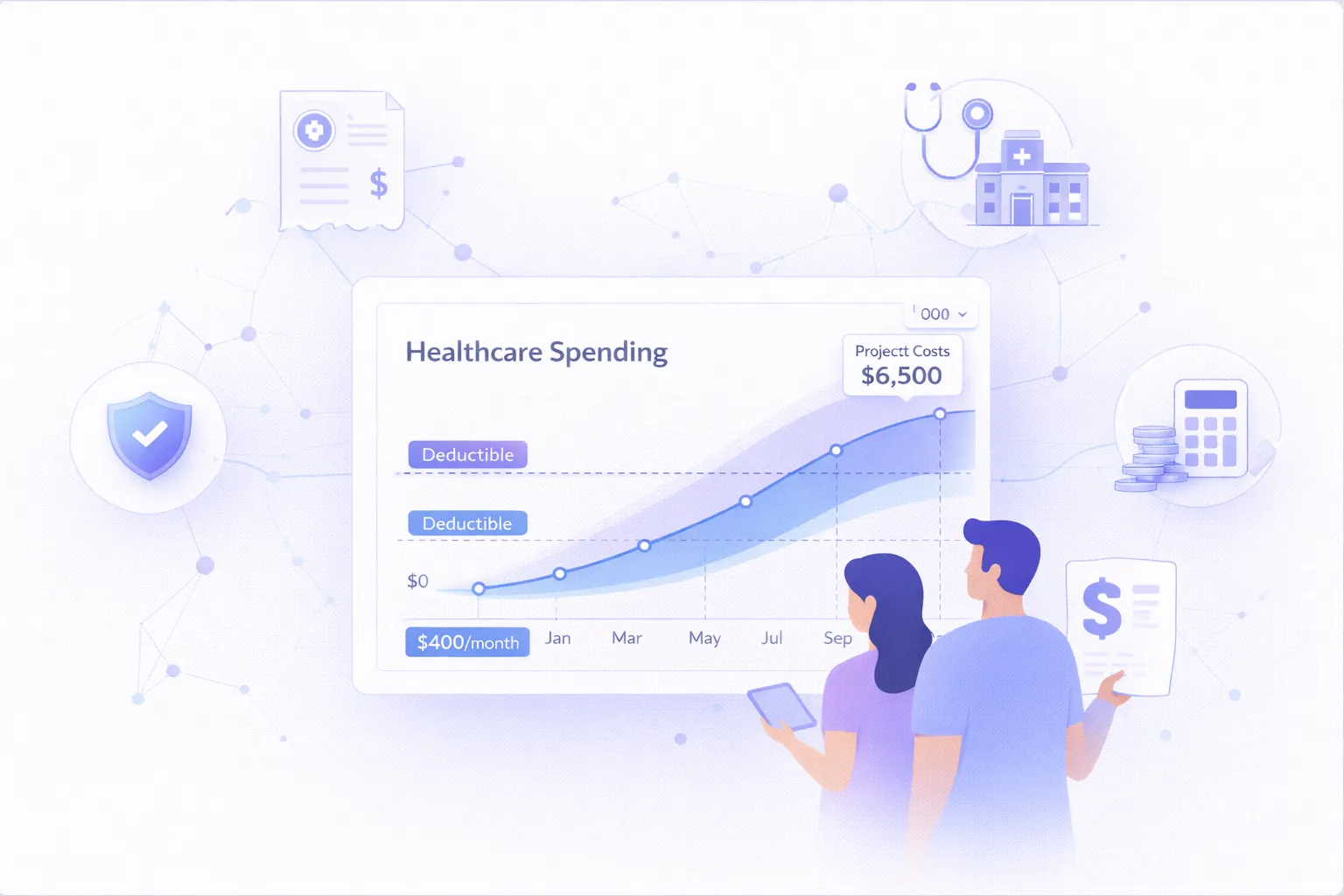
The system wasn't built for you—but CostKits is. Healthcare costs have become the number-one source of financial stress for American families. Most people receive a medical bill without ever seeing a price beforehand. Insurance companies send confusing EOBs. Providers charge wildly different amounts for identical services. And if something's wrong? The system offers no clear path to fix it.
This medical billing guide exists to change that. We've created a comprehensive hub of resources to help you understand every part of healthcare budgeting—from your first bill to your family's annual budget forecast. Whether you're learning how to understand medical bills, managing insurance claims, or planning your family's healthcare budget, this guide provides clear, actionable strategies.
Table of Contents
- How Medical Bills, EOBs, and Insurance Work Together
- How to Detect and Fix Medical Bill Errors
- Plan and Budget for Healthcare Costs
- Understand Medical Debt and Collections
- Compare Healthcare Prices and Procedure Costs
- Free Tools to Help You Analyze and Forecast Healthcare Costs
- Frequently Asked Questions
How Medical Bills, EOBs, and Insurance Work Together
Understanding how medical bills work starts with learning about three key documents. If you've ever received a medical bill, you've probably been confused by it. That confusion is by design—not by conspiracy, but by design. The healthcare billing system was built for hospitals and insurance companies, not for patients.
The first step toward taking control is understanding the two most important documents: your medical bill and your Explanation of Benefits (EOB). This healthcare cost guide breaks down each document so you can protect yourself. Many families never realize these are completely different documents that require different actions.
What you need to know: When you receive medical care, your provider sends you a bill. Your insurance company sends you an EOB (from your insurance company). These two documents often don't match—and that mismatch is where billing errors hide.
Learn the critical difference between these two documents in our complete guide to EOBs vs medical bills. This post walks you through what each document shows, why they often contradict each other, and how to use both together to catch errors before you pay.
Once you understand the basics, it's time to go deeper. Our line-by-line EOB breakdown guide shows you exactly what every field means and where to look when something seems off. If you're holding a medical bill in your hand right now, our step-by-step medical bill reading guide will help you decode what you're looking at in the next 10 minutes.
Here's something most families don't know: Your EOB shows an "allowed amount"—the negotiated rate your insurance company secured from your provider. This is not the same as what the provider charged. Our complete guide to allowed amounts and negotiated rates explains why this matters and how it affects what you owe.
If you use UnitedHealthcare, we've created a specific family guide to reading your UnitedHealthcare EOB. The principles apply to other insurers too, but understanding your specific insurance company's EOB format will save you time and confusion.
How to Detect and Fix Medical Bill Errors
Four out of five medical bills contain errors. Most families never catch them because they don't know what to look for. Billing errors range from small duplicate charges to massive upcoding (billing for a more expensive service than what was actually provided).
The good news: You have more power to fix these errors than you think.
Once you understand what your bill is supposed to say (from the section above), the next step is knowing what errors look like and how to fix them. Our complete medical bill error dispute toolkit covers the major error types (duplicates, unbundling, upcoding, balance billing) and gives you exact language to use when calling your provider's billing department.
Many billing problems begin with low-level mistakes in how claims are coded or processed. Your provider might not have received your insurance information, leading them to charge you as uninsured. You might have been billed twice for the same service. The provider might have used the wrong procedure code, inflating your bill. Our guide to stopping medical bill problems before they start helps you prevent errors at the source.
If you do find an error and need to challenge it, you'll want to know exactly how to negotiate. Our patient playbook for negotiating medical bills covers negotiation strategy, timing, and what language actually works when dealing with billing departments.
For more serious disputes, you have formal appeal rights. Insurance companies deny claims for many reasons—some legitimate, some not. Our guide to writing a claim appeal letter shows you the exact structure that appeals reviewers look for. We include templates, sample language, and the highest-success tactics from patient advocates.
You don't have to do this alone. If all of this feels overwhelming, there are patient advocates and medical billing review services that can help. Our comparison of medical bill service alternatives evaluates your options, showing you when each type of service makes sense and what to watch out for.
Plan and Budget for Healthcare Costs
Healthcare is expensive, and most families have no idea how much they'll actually spend in a given year. This uncertainty leads to stress and sometimes to medical debt when unexpected bills arrive.
You can predict your healthcare costs more accurately than you think. The key is understanding your plan structure (deductible, out-of-pocket maximum, copays) and estimating how much care your family typically uses. Our guide to budgeting for healthcare each year walks you through this process step by step.
Understanding your plan structure starts with knowing the difference between your deductible and your out-of-pocket maximum. These two numbers control everything about how much you'll pay. Most families get them backwards. Our complete guide to deductibles vs out-of-pocket maximums explains what each means, how they interact, and why these numbers matter more than your premium.
Once you understand your plan, you can start estimating costs. Our healthcare cost calculator does the math for you based on your family's age, health status, and plan details. Enter your information and see what a typical year costs—then plan accordingly.
Beyond annual budgeting, there are concrete tactics to reduce your costs. Insurance is just the first level. Our guide to five surprising ways to save on healthcare costs covers negotiation tactics, pharmacy savings, and specific plan choices that actually move the needle.
Here's the uncomfortable truth: Healthcare costs vary wildly depending on where you get care, who owns the facility, and how the system is structured. One CT scan might cost $500 at a hospital-owned facility and $2,000 at a hospital-affiliated urgent care. This isn't a medical choice—it's an economic design. Our guide to why healthcare costs are so opaque explains the 935-billion-dollar pricing problem and why transparency is so difficult.
Understand Medical Debt and Collections
Medical debt is different from other debt. It appears on your credit report. It can affect your ability to borrow. And the collection process can feel aggressive and unfair.
New rules protect you. Starting in 2025, the credit bureaus made major changes to how medical debt is reported. Our guide to the new 2025 medical debt and credit report rules covers what changed, how it protects you, and what to do if you already have medical debt on your report.
If you stop paying a medical bill, it doesn't disappear. Providers and debt collectors have a process they follow. Understanding this timeline helps you make better decisions about negotiation and payment. Our guide to what happens when you don't pay a medical bill shows the exact timeline from first bill to collections, including your rights at each stage.
Compare Healthcare Prices and Procedure Costs
One of the biggest shocks families face is learning that prices for the same procedure vary by 400% or more depending on where you get care. A CT scan might cost $500 at a hospital and $2,000 at an imaging center five miles away.
Knowing these price differences before you get care is powerful. It gives you leverage to negotiate and the ability to choose lower-cost alternatives. Our guide to CT scan costs and why prices vary explains the drivers behind these price differences and how to find the lowest-cost facility in your area.
For specific locations, we've compiled detailed cost data by state. Our comprehensive CT scan cost guide by state shows what families pay in each state for this common procedure. If you're in Texas specifically, our detailed Texas CT scan cost guide includes regional variations within the state.
Use this data to ask your provider for lower-cost facilities, or to shop around if your doctor hasn't referred you to a specific location.
Free Tools to Help You Analyze and Forecast Healthcare Costs
You don't have to navigate this alone. We've built free tools specifically designed to help you understand your bills, analyze your costs, and forecast what you'll spend.
Our anonymous bill analysis tool lets you upload any medical bill (anonymously, no signup required) to see what errors it contains. The tool uses the same AI-powered analysis that healthcare advocates use, checking for duplicate charges, unbundling errors, coding mistakes, and balance billing. You'll get a detailed report showing exactly what's wrong and what to do about it.
Once you've fixed your immediate bills, thinking ahead about next year's costs matters. Our healthcare cost calculator helps you forecast your family's healthcare spending for the year. Enter your age, family size, and plan details—the calculator shows your likely range of costs and where your biggest expenses will be.
Looking for a complete healthcare cost management system? We've created CostKits, an AI-powered health cost assistant. CostKits organizes all your medical bills, analyzes them for errors, and forecasts your total annual spending. Think of it as a personal financial advisor for your healthcare costs.
Frequently Asked Questions
Q: Is an EOB the same as a medical bill?
A: No. An EOB (Explanation of Benefits) is an informational document from your insurance company showing how they processed your claim. A medical bill is a payment request from your healthcare provider. The EOB helps you verify that your medical bill is correct. EOBs arrive first (typically 30-60 days after service), but a medical bill is the actual request for payment that requires action.
Q: What if my EOB and medical bill don't match?
A: This is extremely common and usually indicates an error. Compare both documents line by line. Look for duplicate charges, incorrect procedure codes, or balance billing (charges above the insurance-negotiated rate). If amounts don't match, call your provider's billing department with your EOB in hand and ask them to reconcile the difference. Get the answer in writing before paying.
Q: How long should I wait for my EOB before paying a medical bill?
A: Most EOBs arrive within 30-60 days of service. If you receive a bill before your EOB, wait for the EOB to arrive before paying. Paying too early might result in overpayment or paying for services that should be covered by insurance. If 60 days pass without an EOB, call your insurance company to check on claim status.
Q: Can I negotiate my medical bill?
A: Yes. Healthcare costs are often negotiable, especially if you're paying out-of-pocket or if the bill contains errors. You have leverage if you can show comparable rates from other providers or if the bill exceeds insurance-negotiated rates. Start by asking for an itemized bill and comparing line items to your EOB. Many billing departments will reduce charges if you ask and show them negotiated rates from competitors.
Q: What should I do if I find a billing error?
A: Document the error clearly (exact charge, reason it's wrong, what it should be). Call your provider's billing department with your medical bill and EOB in hand. Be specific about what's wrong. Get the representative's name and ask for a confirmation in writing. If they won't fix it, follow up in writing and reference your conversation. If the provider won't help, escalate to your insurance company.
Q: Why do healthcare costs vary so much by location?
A: Healthcare is a local market economy. Prices depend on facility ownership (hospital vs independent), regional labor costs, local competition, and historical contracting patterns. Hospital-owned facilities typically charge 2-4x more than independent facilities for the same service. There's no "correct" price—it's whatever the local market will bear. This is why shopping around and asking for lower-cost alternatives is so powerful.
Q: What can I do if I can't pay a medical bill?
A: Start by contacting the provider's billing department immediately—don't wait. Ask about payment plans, financial hardship programs, or discounts for paying upfront. Hospitals are required to have financial assistance policies. Many will negotiate or forgive portions of bills for uninsured or underinsured patients. If you have insurance, verify that the bill doesn't contain errors before accepting debt. Only as a last resort should medical bills go to collections, and understand that 2025 rule changes now protect medical debt on your credit report.
Q: Should I use a medical bill review service?
A: It depends on the complexity of your bill and your comfort with the process. Simple bills (one provider, one EOB) you can probably review yourself using our guides. Complex bills with multiple services, providers, or claims might benefit from professional review. Patient advocates and medical bill review services charge 25-40% of savings they find. Only use them if you believe your bill contains significant errors or if you're too overwhelmed to manage it yourself.
About the Author
John Caruso, FSA, MAAA is a healthcare actuary with 20+ years of experience in insurance pricing, medical billing systems, and healthcare cost analytics. He founded CostKits to help families understand and control their healthcare expenses. John has analyzed billions of medical claims to identify pricing patterns, billing errors, and cost-reduction opportunities across commercial and Medicare populations.
He holds the Fellow of the Society of Actuaries (FSA) and Member of the American Academy of Actuaries (MAAA) designations—the gold standard for healthcare financial expertise. Before founding CostKits, John worked with major insurers and healthcare systems to optimize claims processing and reduce billing errors.
Connect with John on LinkedIn →
Key Takeaways
- An EOB (from your insurance company) and a medical bill (from your provider) are different documents that serve different purposes. Always compare them before paying.
- Four out of five medical bills contain errors. Understanding what errors look like—and how to challenge them—can save you thousands.
- You have more power to negotiate healthcare costs than you realize. Insurance-negotiated rates are just the starting point.
- Healthcare costs vary wildly by location and facility type, sometimes by 400% or more for identical services.
- New 2025 rules protect patients from medical debt on credit reports, but understanding your rights requires knowing the details.
- Free tools exist to analyze your bills and forecast your family's annual healthcare costs. Use them.
- The system wasn't built for you—but CostKits is. You deserve to understand what you're paying for and to have tools that help you control those costs.